|
|---|
|
|---|
Monday, August 16, 2010
Mercedes Benz Top Cars
Thursday, July 22, 2010
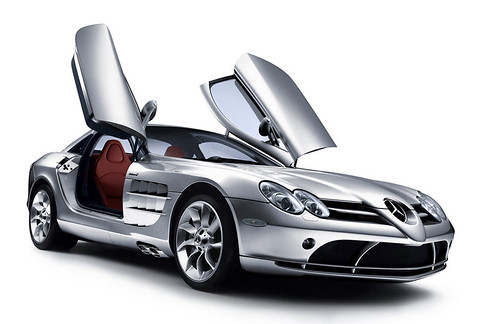
top mercedes mclaren
Due to the presence of the automatic gear box, front mid-engined arrangement, and its driving characteristics, some commentators classify the SLR McLaren as a GT whose rivals would be vehicles like the Aston Martin DBS V12 and Ferrari 599 GTB Fiorano.
mercedes mclaren
Monday, March 17, 2008
Mercedes SL-Class Black Series
Mercedes will add a new model to the Black Series line-up in July. The upcoming SL65 AMG Black Series is based on the SL65 AMG and will follow the route taken by the SLK55 AMG and CLK63 Black Series models.
The SL65 AMG Black Series will be powered by a reworked version of the SL65 AMG’s twin-turbocharged 6.0-liter V12 engine, tuned to deliver in the vicinity of 680 hp.
"We could have easily got 720 hp without any significant modifications. In the end, though, we decided to dial it back," said an insider privy to the new car’s development. "There will be a slight increase in power, but really it’s all about creating optimal conditions for the introduction of direct injection," a source said.
Friday, March 14, 2008
2009 Mercedes B-Class
After three successful years, Mercedes-Benz has overhauled the design and engineering of the B-Class. The facelift programme focused on environmental compatibility, economic efficiency and comfort, with further advances being made in each of these areas. Thanks to a series of detailed improvements, the four-cylinder engines now burn up to seven percent less fuel than previously, and distinguish themselves with remarkably low exhaust emissions that undercut the current EU limits by as much as 90 percent.
Mercedes-Benz has developed a new ECO start/stop function for the high-volume B 150 and B 170 models. This switches off the engine when stopped at traffic lights, for example, producing a fuel saving of up to nine percent in practical use. Additional new developments include the bi-fuel petrol/natural-gas drive in the B 170 NGT BlueEFFICIENCY, along with active parking assist which helps drivers to both find a suitable parking spot, and then manoeuvre into it.
The B-Class continues to be available with a choice of six engines – two direct-injection diesel units (109 hp and 140 hp) delivering up to 300 Nm of torque, as well as four petrol engines with a peak power output of up to 193 hp and a maximum torque of 280 Nm. The four-cylinder power units have undergone a series of detailed improvements in order to further reduce fuel consumption.
A further new addition to the B-Class range bears the initials "NGT" on the right-hand side of its tailgate. They stand for "Natural Gas Technology" and identify a model variant which is as economical as it is environmentally compatible, courtesy of its bi-fuel drive: the B 170 NGT BlueEFFICIENCY is able to run on both natural gas and premium grade petrol while delivering an identical maximum output of 116 hp.
Since its market premiere in summer 2005, the B-Class has evolved into the blueprint for a new species of car which harmonises the benefits of various vehicle concepts: the four-door model boasts the dynamic design of a sporty saloon, the exterior dimensions of a compact car, the spaciousness of an estate, the versatility of a mini MPV and, of course, the trademark safety of a Mercedes-Benz.
The sales figures for the B-Class to date provide clear evidence that the Mercedes-Benz product planners hit the mark with a concept that caters to the motoring needs of today’s sophisticated society: since mid-2005, over 325,000 motorists around the world have been won over by the Sports Tourer.
The restyled front end injects the B-Class with even more poise and assurance than before. This is primarily down to the radiator grille with its three chromed cross fins painted in metallic grey and the Mercedes star integrated into its centre. However, the more imposing appearance of the B-Class also stems from the new-look bumper – whose design emphasises the large air intake at the bottom – as well as the modified bonnet.
Design: restyled front end creates a powerful presence
This new design idiom makes the front look broad and, as a consequence, especially powerful, symbolising the sporty attributes of the B-Class even more clearly than before. Aside from power and performance potential, these qualities include the car’s agility and its forwards thrust, something which is further underlined by the more pronounced arrow shape of the bonnet, radiator grille and bumper. This has the effect of making the entire front section appear to be surging dynamically forwards – a highly expressive styling element of the current Mercedes design idiom, which can be appreciated better than ever before in the 2008 model year version of the B-Class. The front end’s arrow shape is continued rearwards in the form of an understated but effective line running up the centre of the bonnet.
Typical distinguishing features of the current Mercedes style are also very much in evidence in the side profile of the B-Class, which presents a thrilling interplay between taut forms and crisp lines. Of particular note is the character line, which rises progressively from the front wing to the rear tail light, thereby marking an intriguing divide between the concave and convex-formed surfaces along the body’s flanks. This line furthermore underscores the body’s wedge-shaped form, and thereby gives added impact to the Sports Tourer’s athletic, powerful nature.
In the 2008 model year B-Class, the design at the sides seems even more harmonious and elegant than before because the exterior mirror housings, door handles and skirt panels are now painted to match the body colour on all model variants. The restyled hubcaps and light-alloy wheels add further touches of class to the exterior looks.
The rear styling picks up on the dynamic flow of lines at the front and along the sides. A direct visual link is created by the tail light assemblies, whose upper edges merge seamlessly with the character line along the vehicle’s sides. The tail lights sport a new high-brilliance look and draw the gaze to the large tailgate, which now comes with en ergonomically enhanced chrome handle strip. The rear bumper has been remodelled too, and includes a black-grained plastic insert on its upper face as standard which serves as a load sill guard. If the B-Class is specified with either the chrome or the sports package, this insert is made of polished stainless steel instead to add yet another gleaming highlight to the tail’s design.
Interior: high-grade appointments with new upholsteries and trims
High-class appeal, attention to detail and a sense of ample spaciousness – these qualities have always been intrinsic to the B-Class. The winning blend of forms, colours and materials teams up with the interior’s roominess, the pleasant feel of all its surface materials and the expansive window areas to produce a most inviting ambience. This is helped by the high seating position – which, incidentally, improves the driver’s view of the vehicle too – while the relatively high waistline fosters a sense of security without making the occupants feel confined in any way.
The Mercedes design team has further upgraded the interior with a new upholstery fabric, plus a new fabric pattern for the seat cushions. If the B-Class is ordered with the sports package, the side seat bolsters are trimmed in ARTICO man-made leather and the centre panels in fabric. The interior door linings likewise feature a new fabric trim.
The centre console continues to be bordered by trim strips on both sides, but they are now made from diagonally brushed aluminium in a smoke grey finish. The same, meticulously integrated trim is found again in the vicinity of the gearshift and in the door panelling, giving the interior an added sense of refinement. Such fine touches demonstrate just how much attention to detail has been invested in even the basic version of the B-Class, as well as the high standards to which it has been specified.
Diesel engines: fuel consumption reduced by a further seven percent
The B-Class continues to be available with a choice of six engines – two direct-injection diesel units (80 kW/109 hp and 103 kW/140 hp) delivering up to 300 Newton metres of torque, as well as four petrol engines with a peak power output of up to 142 kW/193 hp and a maximum torque of 280 Newton metres. The four-cylinder power units have undergone a series of detailed improvements in order to further reduce fuel consumption.
For the diesel models, this means that the combined NEDC fuel consumption
of the B 180 CDI and B 200 CDI has dropped by as much as seven percent – depending on tyre size – to 5.2 - 5.4 and 5.4 - 5.6 litres per 100 kilometres, respectively. The two turbodiesel models will therefore be an even less seldom sight at the filling station from now on; the B 180 CDI can clock up over 1000 kilometres on a single tank of fuel (54 litres).
Petrol models: new fuel-saving ECO start/stop function
Depending on the model and engine output, the four petrol variants of the B‑Class return fuel consumption figures of between 6.6 and 8.1 litres per 100 kilometres on the NEDC driving cycle. From autumn 2008, motoring is set to become even more economical with the arrival of the B 150 and B 170 BlueEFFICIENCY models featuring the ECO start/stop function (optional). This newly developed function automatically switches the engine off when the driver shifts to neutral at low speed whilst depressing the brake pedal. If the criteria for stopping the engine are fulfilled, a special display appears in the instrument cluster to inform the driver.
The moment the clutch is pressed or the brake pedal released, the engine springs back to life almost noiselessly and in a fraction of a second. This ability to restart the engine swiftly yet smoothly gives the ECO start/stop function a key edge over other systems of this type. To achieve this, Mercedes-Benz fits a starter-generator which is connected to the crankshaft via the belt drive. This allows the engine to start much faster and far more quietly than with the conventional starter.
During the journey, the starter-generator feeds the electrical system on board the B-Class with energy.
In practical operation, substantial fuel savings of up to nine percent can be achieved with the ECO start/stop function, particularly when driving in city traffic with frequent stops at traffic lights or in tailbacks.
Natural-gas drive: a clean and economical alternative
A further new addition to the B-Class range bears the initials "NGT" on the right-hand side of its tailgate. They stand for "Natural Gas Technology" and identify a model variant which is as economical as it is environmentally compatible, courtesy of its bi-fuel drive: the B 170 NGT BlueEFFICIENCY is able to run on both natural gas and premium grade petrol while delivering an identical maximum output of 85 kW/116 hp.
In addition to the petrol tank, there are five natural gas reservoirs whose total capacity of 16 kilograms equates to a range of over 300 kilometres. With overall NEDC consumption figures of 7.3 litres of premium petrol and 4.9 kilograms of natural gas per 100 kilometres, the new B 170 NGT BlueEFFICIENCY is therefore able to attain a total range in excess of 1000 kilometres. The driver determines which power source the engine is run on at the touch of a button using the multifunction steering wheel; an electronic control unit carries out the switch instantaneously without any jolts – even while on the move.
The four-cylinder engine has been modified by Mercedes-Benz to include additional gas injectors on the underside of the intake manifold. A close-coupled pressure governor with electromagnetic shut-off valve regulates the supply of natural gas and keeps the pressure within the system constant.
The installation of the gas reservoirs, which are located in the rear and underneath the front passenger footwell, reduces the boot capacity of the B‑Class by 128 to 422 litres (as per the VDA measurement method), but there is still sufficient space for carrying a family’s luggage.
The lower carbon dioxide emissions and cheaper fuel costs make natural gas an attractive alternative to petrol and diesel, both ecologically and economically speaking. On the NEDC cycle, the CO2 emissions are 17 percent lower than in the petrol-powered B 170 at 135 grams per kilometre. If the 4.9 kilograms (7.5 m³) of natural gas consumed per 100 kilometres by the new B 170 NGT BlueEFFICIENCY is converted into the equivalent quantity of petrol energy, the fuel cost per kilometre is around 50 percent less than when running on petrol.
Environmental Certificate: first ever lifecycle assessment for NGT drive too
Mercedes engineers have, for the first time, compiled an eco balance sheet for the natural-gas drive. It forms one element of the Environmental Certificate awarded to the B-Class by Germany’s TÜV Technical Inspection Authority. Mercedes-Benz is the only automotive brand in the world to have been granted this certificate, which is based on the stringent international standard ISO 14062 "Design For Environment". It is a confirmation of the Stuttgart-based brand’s total commitment to all aspects of environmental protection. In contrast to just the standardised measurement of exhaust emissions and fuel consumption on the roller dynamometer, Mercedes engineers analyse the environmental compatibility of vehicles over their entire lifecycle – starting with their manufacture, continuing with their many years of use and finishing with their end-of-life disposal.
In all, over 40,000 individual processes come under scrutiny, whose analysis, computation and evaluation ultimately produce a comprehensive eco profile.
This in turn forms the basis for the environmental certificate of the B-Class.
The results of this integrated analysis over a total distance travelled of 150,000 kilometres highlight, for example, a number of clear advantages for the natural-gas drive. The overall CO2 emissions are some 20 percent below the figure for the comparable petrol-engined model. Nitrogen oxide emissions are eleven percent lower, while the experts have calculated a 54 percent difference in carbon monoxide emissions over the entire lifecycle in favour of the natural-gas drive. The greater ecological cost of the manufacturing process for the new B 170 NGT is therefore balanced out after a distance of 17,300 kilometres.
The environmentally driven concept of the B-Class is clearly evident from its use of high-quality recycled plastics, for instance, or its components made from natural materials, including flax, cotton, coconut fibre, wood veneer and fibres from the abaca banana.
Occupant protection: extensive safety features enhanced yet further
When it comes to safety, the B-Class sets an example for all other models of these dimensions to follow: in the European NCAP test programme, the Sports Tourer was awarded the highest rating of five stars.
The comprehensive safety specification, comprising two-stage front airbags, belt tensioners for the front and outer rear seats, belt force limiters plus active head restraints in the front, ISOFIX child seat attachment points and head/thorax sidebags, has now been complemented by the addition of crash-responsive emergency lighting in the passenger compartment.
Following an accident
of a predetermined severity, the lighting comes on automatically to allow the occupants to get their bearings more easily in the dark and expedite the work of the rescue services.
Active safety: flashing brake lights as warning to other motorists
Accident prevention is the overriding priority of the Mercedes safety concept – a concept that is geared towards motoring reality. To help them bring critical situations under control safely and with ease, drivers of the B-Class can count on highly effective, standard-fit technology in the form of systems such as ABS, Brake Assist and ESP®. The Mercedes engineers have gone that little bit further though by seeking to devise a way of offering other motorists added safety too. The result is a simple but highly effective method of avoiding rear-end collisions: flashing brake lights. This safety technology is included as standard on the 2008 model year B-Class.
During testing, Mercedes engineers were able to ascertain that the braking reaction time of motorists is quickened by an average of 0.2 seconds if they see a flashing red warning signal instead of conventional brake lights in an emergency braking situation. This shortens the stopping distance by around 4.40 metres if they are travelling at a speed of 80 km/h, and by a whole 5.50 metres or so when braking from 100 km/h. Brake lights flashing at a high frequency therefore prove to be an effective means of alerting drivers behind to the risk of a rear-end collision.
The flashing brake lights are triggered automatically if the driver initiates emergency braking when travelling at a speed of 50 km/h or more. And if the B‑Class is braked to a stop from a speed of over 70 km/h, the hazard warning lights will come on too.
Assistance systems: automatic parking with ultrasound and electric steering
The Electronic Stability Program has been expanded to include a new, standard function: the automatic hill-start assist. This prevents the B-Class from rolling backwards as the driver switches from the brake to the accelerator pedal when starting off uphill. In such situations, the ESP® briefly maintains the brake pressure to make pulling away easy.
Reverse parking will also pose less of a challenge for motorists in future. The new active parking assist (optional) searches for an appropriate spot at the side of the road as the B-Class drives by, than takes care of all the steering manoeuvres as the driver reverses into it. How it works: at speeds below 35 km/h, ultrasonic sensors at the sides of the car scan the zones to the immediate left and right of the B-Class, and measure the length and depth of any potential parking spaces. Once a suitable spot has been found, the system flashes up a message in the display to inform the driver. When the driver engages reverse, confirms the display and presses the accelerator, the active parking assist takes over the steering and automatically manoeuvres the B‑Class into the space. All the driver has to do is operate the accelerator and brake; the PARKTRONIC system’s ultrasonic sensors provide further assistance by indicating how much room there is in front of and behind the B-Class.
To be able to use the automatic parking feature, the parking spot only has to be 1.30 metres longer than the B-Class – an indication of the technology’s tremendous precision.
The newly developed assistance system comprises a total of ten ultrasonic sensors in the front and rear bumper, as well as an electronic control unit that processes the sensor signals and calculates the best path to take into the parking space. This information is supplied to the electromechanical power steering in the B‑Class, enabling its electric motor to perform the necessary steering movements.
Infotainment: new systems for digital listening pleasure and Europe-wide navigation
It is not just the spacious interior, the high-grade materials and the standard automatic climate control that make the B-Class such a pleasure to travel in: the new generation of infotainment systems has an important role to play too. There are four different options to choose from: Audio 5, Audio 20, Audio 50 APS and the COMAND APS. All units from the Audio 20 upwards incorporate a radio with dual tuner, colour display, Bluetooth interface for mobile phones, CD player, automatic volume adjustment, plus a connection for external audio devices in the glove compartment.The Audio 50 APS additionally features a Europe-wide DVD-based navigation system and DVD player, while the top-of-the-range COMAND APS offers even more functions, including the even faster HDD navigation system, the Music Register, a slot for SD memory cards as well as voice control.
To cater for motorists who have their personal music compilations stored on an MP3 player, a USB stick or any other external audio device, Mercedes-Benz has developed an interactive media interface. It can be specified as an option and allows iPod & Co. to be linked up to the Sports Tourer’s infotainment system. This has the advantage of allowing the external audio devices to be operated by simply using the buttons on the multifunction steering wheel, while the track titles are shown in both the instrument cluster and the centre console’s colour display.
The sophisticated infotainment systems may be optionally combined with the "Logic 7" surround sound system , which transforms the passenger compartment of the B-Class into a concert hall on wheels
Thursday, March 13, 2008
2009 Mercedes ML-Class
Mercedes launch the new generation ML-Class, a stylish SUV that now has even more distinctive characteristics, and looks even sportier and more powerful. The front end of this off-roader is now defined by a redesigned bumper, recontoured headlamps and a larger, even more dominant radiator. The rear view also sports a new-look bumper with integrated reflector strips, emphasising the vehicle’s width, as well as tails lights with a smoked-glass look. Stylistic fine-tuning and new high-grade materials which are pleasing to the eye and touch combine with a new two-tone colour scheme to add fresh highlights to the interior.
The Ml-Class is being offered in five different versions with output between 190 to 388 hp. The engines, either V6 or V8, both petrol and diesel, are now even more fuel-efficient. And the standard-fit 7G-TRONIC automatic transmission with optimised shift characteristics translates the power from the engines into refined dynamism.
The most powerful model, the ML 63 AMG 4MATIC is powered by a 6.3-litre V8 AMG engine that delivers 510 hp at 6800 rpm and a peak torque of 630 Nm at 5200 rpm. It makes the 0-100 km/h (62 mph) sprint in 5.0 seconds and can hit a top speed of 250 km/h (155 mph).
Press release
Mercedes-Benz has meticulously revamped the successful M‑Class. The new generation of the dynamic, stylish SUV now has even more distinctive characteristics, and looks even sportier and more powerful. The front end of this off-roader is now defined by a redesigned bumper, recontoured headlamps and a larger, even more dominant radiator. The rear view also sports a new-look bumper with integrated reflector strips, emphasising the vehicle’s width, as well as tails lights with a smoked-glass look. Stylistic fine-tuning and new high-grade materials which are pleasing to the eye and touch combine with a new two-tone colour scheme to add fresh highlights to the interior. Moreover, the eye is immediately drawn to the new four-spoke multifunction steering wheel. The M-Class standard specification has also been significantly upgraded. It now includes the unique anticipatory occupant protection system PRE-SAFE® and NECK-PRO head restraints as well as an all-new, high-performance telematics system developed by Mercedes-Benz, which is much easier to use thanks to a host of new functions. The Mercedes-Benz ML 63 AMG is also set to become even more distinctive and striking, courtesy of new front and rear aprons with a chromed underguard, and a larger AMG radiator grille.
The Mercedes-Benz M-Class is the trendsetter among today’s SUVs. Its exceptional status is down to its characteristic dynamic, stylish design, a combination of compelling performance both on and off-road, the ride comfort and ease of operation of a saloon, along with a high perceived value. The M-Class also comes with a range of safety features that are unsurpassed in the SUV segment. Buyers have also come to appreciate these outstanding qualities. Since the second-generation M-Class was launched in April 2005, some 300,000 units have been delivered to customers around the world. As such, the state-of-the-art off-roader remains one of the most successful vehicles in this rapidly growing market segment.
Mercedes-Benz has now substantially upgraded the new-generation M-Class with fresh styling touches, even higher quality and extensively enhanced equipment and appointments. The premium SUV now looks even more powerful and sportier, making a bolder statement in terms of character and presence.
Added character and style for the exterior
The assured appearance of the M-Class is now marked by its dynamically flowing, yet at the same time crisp lines and a clear, powerful design idiom. Thanks to the new-look front-end as well as the modified rear, the new-generation M-Class looks more muscular yet brings a sense of aesthetic elegance to bear – in short, it has even more style.
The front end is dominated by a new-look, robust bumper as well as headlamps with a pronounced step in the lower edge. This step continues seamlessly down and around the radiator with its distinctive contours. The larger, lower-set radiator is another element brimming with character. Three wide, black louvres with large, rectangular air outlets and a gleaming chrome edge give structure to the radiator, making the new-generation M-Class appear even more dominant. Fog lamps set well to the outside and a new-look simulated underguard make the off-roader appear wider and even more dynamic.
The rear bumper with integrated reflectors has also been restyled, making the M‑Class appear even more poised and assured for anyone following behind. The optional stainless steel underguard conceals the exhaust system with its twin tailpipes and also gives the car a wider stance on the road. The reversing lights also feature darkened indicator repeater lenses in a smoked-glass look. Roof rails are now also included as part of the standard-fit styling and practical features, along with the new powerful mirrors with their larger surface designed to provide better visibility.
Interior with high-grade appointments
The interior of the new-generation, state-of-the-art off-roader has been stylishly upgraded with high-quality materials. The door centre panel is now trimmed in ARTICO man-made leather. Two-tone leather appointments are also available as an option to give a hand-made impression. In the enhanced interior the eye is also drawn to the new, four-spoke leather multifunction steering wheel with its chrome trim, improved ease of operation and standard-fit shift paddles. The seats have a more attractive, sportier design and can be fitted with four-way lumbar support as an option.
The new-generation M-Class features a brand new telematics generation developed by Mercedes-Benz, offering a new dimension in user-friendliness, high performance and a host of useful new functions. Integrated features include a hands-free system based on Bluetooth technology, and an aux-in connection for mobile audio devices such as an iPod. On request there is also a new Media Interface, which can connect an external music device with the off-roader’s onboard electronics and control system, enabling music tracks to be shown in the instrument cluster and the colour display in the centre console, and conveniently accessed using the buttons on the multifunction steering wheel. At the same time, the audio device’s battery is also charged.
There is a choice of three units, all of them with a colour display, a twin tuner for improved radio reception, speed-sensitive volume control, a keypad for entering telephone numbers and radio frequencies and a Bluetooth interface which enables a mobile phone to be wirelessly linked to the hands-free system. Along with the new telematics generation, Mercedes-Benz also is now also offering enhanced LINGUATRONIC voice-operated control system as an optional extra in the M‑Class for the first time.
The occupants are also able to enjoy a surround-sound experience of concert hall quality with the latest generation of the optional Harman Kardon® Logic7® sound system, which delivers exceptionally crystal-clear listening pleasure thanks to its output of 610 watts and digital signal processor (DSP).
Rear-seat passengers also have the option of a new entertainment system with two large 8-inch screens, a centrally integrated DVD player, two sets of wireless headphones for greater freedom of movement as well as two remote controls.
Unrivalled safety features as standard
The Mercedes-Benz M-Class has always set the benchmark in terms of safety in the SUV segment. In future it will also come as standard with the anticipatory occupant protection system PRE-SAFE® and NECK-PRO head restraints.
Fuel consumption reduced by up to 0.4 litres per 100 kilometres
The M-Class is powered by powerful yet economical V6 and V8 petrol or diesel engines, which are now even more fuel-efficient. The 4MATIC permanent all-wheel drive delivers outstanding performance both on and off-road. And the standard-fit 7G-TRONIC automatic transmission with optimised shift characteristics translates the power from the engines into refined dynamism.
Five units are available in the new-generation M-Class ranging from 140 to 285 kW (190 to 388 hp). The engineers’ meticulous attention to detail has reduced fuel consumption by up to 0.4 litres per 100 kilometres compared with the outgoing models. Moreover, the most powerful engine developing 375 kW/510 hp is available in the guise of the ML 63 AMG 4MATIC.
ML 63 AMG with even more attractive looks
The Mercedes-Benz ML 63 AMG now demonstrates even more emphatically its exceptional status as the performance SUV with the largest displacement and highest output. The new AMG front apron is an eye-catching feature with its high-gloss, chromed underguard. The lower cooling air inlet appears even larger thanks to the central black grille. New-look headlamps flank the equally new AMG-specific radiator grille: painted in high-gloss black, its three radiator louvres feature chrome highlights. Round fog lamps set well to the outside with chrome surrounds and the flared wheel arches in the body colour make the flagship M‑Class appear even wider and more muscular.
Even more unmistakable, even more powerful: this philosophy is also continued at the rear. The high-gloss, chromed underguard is the undoubted highlight on the equally new AMG rear apron with integrated reflectors. Further visual highlights include the two chromed twin tailpipes on the AMG sports exhaust system. The dark-tinted tail lights are replaced with LED tail lights with their clear-glass look if the optional bi-xenon headlamps are specified. New-look exterior mirrors as well as the standard-fit aluminium-look roof rails add the finishing touches to the styling modifications.
Viewed from the side, the new 20-inch 5-spoke AMG light-alloy wheels make a bold statement. Painted titanium grey with a high-sheen finish, the 10-inch tyres are shod with 295/40 R 20 tyres front and rear. An even more impressive wheel/tyre combination is available as an option: titanium-grey-painted, high-sheen 21-inch AMG light-alloy wheels with the new twin-spoke styling are shod with 295/35 R 21 tyres.
The new AMG ergonomic steering wheel stands out in the practical, high-quality interior of ML 63 AMG: perforated leather adorns the specially shaped grip area, while the bottom two spokes are finished with a silver-coloured insert. New AMG aluminium shift paddles allow the driver to shift gear manually. A nappa leather-trimmed dashboard is also available as an option.
The new telematics generation also features in the M-Class. The Audio 20 fitted as standard in the ML 63 AMG combines ease of use and logical menu structure with consummate entertainment. A hands-free system with Bluetooth technology comes as standard and a new Media Interface in the glove compartment is available as an option, which enables mobile audio devices such as the iPod to be fully integrated and then controlled via the audio system’s user interface. Mercedes-Benz also offers the optional enhanced LINGUATRONIC voice-operated control system with its hallmark outstanding functionality in conjunction with the new telematics generation.
AMG 6.3-litre V8 engine and permanent, asymmetrical all-wheel drive
With a maximum output of 375 kW/510 hp at 6800 rpm the ML 63 AMG remains the most powerful off-roader on the market two-and-a-half years after its launch. The AMG 6.3-litre V8 engine develops maximum torque of 630 Nm at 5200 rpm from a displacement of 6208 cc. In essence, this superior engine delivers top-notch performance. The ML 63 AMG accelerates from 0-100 km/h in 5.0 seconds, top speed is 250 km/h (electronically limited). Power transfer is via the AMG SPEEDSHIFT 7G-TRONIC automatic transmission with three drive modes.
The permanent all-wheel drive is decidedly sporty: the power is split asymmetrically 40:60 between the front and rear wheels to provide optimum agility. The AMG sports suspension based on AIRMATIC guarantees dynamic performance combined with the hallmark Mercedes long-distance comfort. The air suspension features AMG-specific damper struts and the specially configured adaptive damping system ADS including automatic level control all-round. Both the dampers and springs instantly respond as the current driving situation changes, but their settings may also be adjusted manually in three stages at the touch of a button. The generously dimensioned AMG high-performance braking system, which features internally ventilated and perforated brake discs all-round, guarantees the shortest possible braking distances and optimum resistance to fading.
AMG sports seats with nappa leather upholstery and Alcantara inserts
The standard specification of the ML 63 AMG includes electrically adjustable AMG sports seats with nappa leather upholstery, Alcantara inserts in the shoulder areas, multicontour function and heating. The AMG instrument cluster comes with a specially designed AMG main menu with gear indicator, recommended upshifts, as well as engine oil temperature and battery voltage display. The integrated RACETIMER enables the driver to record lap times on a racing circuit.
Friday, March 7, 2008
New AMG Safety and Medical cars
Mercedes announced that the SL 63 AMG and C 63 AMG Estate are the new Official F1 Safety Car and the new Official F1 Medical Car. The Safety Car, based on the SL 63 AMG, and the Medical Car, derived from the C 63 AMG Estate, have the task of ensuring maximum safety at all 18 Formula 1 races. The two specially prepared AMG high-performance automobiles will be on duty for the first time when the Grand Prix season kicks off in Melbourne, Australia (March 14 to 16, 2008).
The SL63 AMG is powered by a 6.3-litre V8 enginethat delivers 525 hp, providing acceleration from zero to 100 km/h in 4.6 seconds. A newly developed AMG sport exhaust system with larger pipe diameter and new rear silencers allows the high-revving AMG naturally aspirated engine to breathe even more freely. Both the motor sport fans at the racetrack and also those at home in front of their TV sets are captivated by the vehicle’s special sound tuning.
The C63 AMG Estate is powered by a AMG 6.3-litre V8 engine, which delivers 457 hp and 600 Newton-metres of torque. Like the SL 63 AMG Safety Car, the C 63 AMG Estate Official F1™ Medical Car also features a newly developed thread chassis combining sportscar-like driving dynamics with versatile adjustment possibilities, thus additionally allowing the chassis setup to be customized to a specific racetrack.
Press release
With the new Official F1™ Safety Car and the new Official F1™ Medical Car, Mercedes-AMG, the performance brand of Mercedes-Benz, is launching into the 2008 Formula 1 season. The Safety Car, based on the SL 63 AMG, and the Medical Car, derived from the C 63 AMG Estate, have the task of ensuring maximum safety at all 18 Formula 1 races. The two specially prepared AMG high-performance automobiles will be on duty for the first time when the Grand Prix season kicks off in Melbourne, Australia (March 14 to 16, 2008). The specialists from the AMG development team and the PERFORMANCE STUDIO are responsible for the development, production and servicing of the vehicles.
The Official F1™ Safety Car is immediately on hand whenever the safety of a race is threatened by accidents, adverse weather conditions or other hazardous situations. After receiving his instructions from the race management, Bernd Mayländer, the driver of the Safety Car, must go to the head of the Formula 1 field and safely guide the world’s fastest racing drivers around the circuit. Fast lap times are a must for the Safety Car, because otherwise the sensitive Formula 1 engines would overheat – and their tyres and brakes would cool down excessively.
In the 2008 Formula 1 season, Mayländer, 36, will be behind the wheel of a new Official F1™ Safety Car, the SL 63 AMG. This high-performance roadster, which was presented to the public just a few days ago at the Geneva Motor Show, has the finest of pedigrees for its challenging assignment: its AMG 6.3-litre V8 engine has a power output of 386 kW/525 hp, providing acceleration from zero to 100 km/h in 4.6 seconds. A newly developed AMG sport exhaust system with larger pipe diameter and new rear silencers allows the high-revving AMG naturally aspirated engine to breathe even more freely. Both the motor sport fans at the racetrack and also those at home in front of their TV sets are captivated by the vehicle’s special sound tuning.
Special cooling measures and heavy-duty composite braking system
In the interests of best possible reliability even at tropical ambient temperatures, the vehicle incorporates large-size, additional coolers for engine oil, transmission oil, cooling water and power steering. Outstanding driving dynamics are guaranteed by the newly developed AMG SPEEDSHIFT MCT 7-speed sports transmission with column shift, which makes it possible to change gear in just 100 milliseconds. The combination of 3-stage ESP® and rear-axle differential lock with 30 percent locking effect provides optimum traction in all weather conditions. Not only the newly developed thread chassis, which has proved its worth in races, guarantees ideal racetrack performance, optimal road feel and sportscar-like cornering and over/understeer characteristics, but also the numerous adjustment possibilities for ride height, track width and camber enable the chassis setup to be customized to the particular racetrack.
The front and rear axles feature 19-inch extra-light AMG forged light-alloy wheels. The 8.5-inch (front) and 9.5-inch (rear) rims are fitted with tyres of size 255/35 and 285/30, respectively, from Formula 1 tyremaker Bridgestone. The design of the rims, with their intricately styled double spokes, optimizes both the cooling of the highly stressed braking system and the specially engineered cooling-air flow. Optimum fading resistance and best-possible deceleration values are among the self-evident characteristics of the AMG high-performance braking system, which is equipped all round with internally ventilated composite brake discs. The front axle is fitted with six-piston fixed callipers and discs of size 390 x 36 millimetres, while the rear axle features four-piston fixed callipers with brake discs of size 360 x 26 millimetres.
220 kilograms lighter than the series-production vehicle thanks to targeted lightweight design measures
Like its predecessor, which was based on the CLK 63 AMG, the SL 63 AMG Safety Car weighs in lighter than its series-production counterpart thanks to targeted lightweight design measures allied to the selective omission of some comfort features on account of the vehicle’s specific mission – and this despite a larger braking system including brake cooling, additional cooling measures, lighting system and communications equipment. In order to deliver top-drawer racetrack performance, the specialists from AMG have produced the engine bonnet, front and rear aprons, front wings and luggage compartment lid from carbon fibre reinforced plastic (CFRP), a material that has been tried and tested in motor sports. Since the Safety Car is always driven with its top up, it has been possible to dispense with all the mechanical and hydraulic components of the Vario roof. Likewise, the sound-absorbing materials, which serve primarily to improve the ride comfort, have been removed. The result is a weight reduction of 220 kilograms, with the Safety Car weighing in at just 1750 kilograms (with a full tank and without occupants).
Apart from its roof bar and F1 logos, the SL 63 AMG Official F1™ Safety Car is distinguished from the standard-production AMG high-performance roadster by a newly designed front apron with larger cooling-air openings. A prominent feature at the rear of the vehicle is the modified diffuser insert in the rear apron, which incorporates the active rear-axle cooling, this compensating for temperature peaks in the highly stressed differential housing. The white LED flashlights in the headlamps and tail lamps are always in operation whenever the vehicle is in use and have a neutral signalling function. An all-new feature is the number plate with Safety Car lettering: illuminated by means of 672 LEDs, it guarantees even greater safety, particularly in rain or darkness.
Interior with undiluted motor sport flair
The inside of the Safety Car is dominated by an atmosphere of undiluted motor sport flair. The workplaces of Bernd Mayländer and his co-driver feature two AMG sports bucket seats with 4-point seatbelts, trim parts in real carbon fibre, black leather appointments and the AMG performance steering wheel with its 365-millimetre steering wheel rim, flat underside and AMG aluminium shift paddles. The centre console is equipped with two monitors for supervising the action on the racetrack, and the two-way radio system allows the crew of the Safety Car to remain in contact with the race management. A roll-over bar serves to increase both the safety of the occupants and also the stability of the vehicle.
C 63 AMG Estate: the new Official F1™ Medical Car
Alongside the SL 63 AMG Safety Car, a second AMG high-performance automobile will celebrate its premiere at this season’s first Grand Prix in Melbourne, Australia: the C 63 AMG Estate Official F1™ Medical Car. At the start of every Grand Prix, the high-speed AMG estate car will follow the Formula 1 field on the first lap. This is because the first lap represents a critical phase of the race in which the field of Formula 1 vehicles is especially tightly bunched. Also in the event of an accident during the race, the Medical Car is the first vehicle on the scene and is able to guarantee the fastest possible emergency treatment.
This quite special C 63 AMG Estate has excellent credentials for such a challenging task, where literally every second counts: the high-performance estate vehicle is powered by the AMG 6.3-litre V8 engine, which delivers 336 kW/457 hp and 600 Newton-metres of torque. The AMG sport exhaust system boasts larger pipe diameters and new rear silencers, this resulting in a considerably more distinctive sound that comes out of the two chrome-plated dual tailpipes. In order to guarantee greater reliability, the cooling of coolant, engine oil, transmission oil and power steering has been optimized, this being visible also from the new AMG front apron with its considerably larger cooling-air openings. The power from the engine is transmitted via the AMG SPEEDSHIFT 7G-TRONIC PLUS, which blips the throttle when changing down for even greater smoothness. Perfect traction is guaranteed by the combination of 3-stage ESP® and differential lock with 35 percent locking effect.
New thread chassis and AMG high-performance braking system
Like the SL 63 AMG Safety Car, the C 63 AMG Estate Official F1™ Medical Car also features a newly developed thread chassis combining sportscar-like driving dynamics with versatile adjustment possibilities, thus additionally allowing the chassis setup to be customized to a specific racetrack. Equally responsible for perfect road feel is the selected wheel/tyre combination: the 19-inch AMG light-alloy wheels of 8.5-inch (front) and 9.5-inch (rear) width are fitted with Pirelli tyres of sizes 255/35 and 285/30, respectively. Concealed behind the attractive multi-spoke wheels is a powerful AMG high-performance braking system, which guarantees extremely short stopping distances with its internally ventilated and perforated composite brake discs on the front axle of size 360 x 36 mm with six-piston fixed callipers together with 330 x 26 millimetre, internally ventilated and perforated discs on the rear axle. The newly developed cooling system for the especially highly stressed front-axle brakes optimizes the fading resistance of the braking system at high ambient temperatures.
F1 logos, roof bar and flashlights as distinctive marks
At first glance, the C 63 AMG Estate Official F1™ Medical Car closely resembles its standard-production counterpart. However, a closer inspection reveals the new AMG front apron with its larger cooling-air openings. At the rear, the cooler which has been integrated into the diffuser insert points to the active cooling of the rear-axle differential. Like the Safety Car, the Medical Car, too, draws attention to its special role on the track through its F1 logos, roof bar and strobe-like LED flashlights at front and rear. Enhanced visibility in darkness or bad weather is ensured by the LED-illuminated number plate with Medical Car lettering on the boot lid tailgate.
The Official F1™ Medical Car is driven by Dr. Jacques Tropenat (France), who is a medic and amateur race driver. His co-driver is Dr. Gary Hartstein (Belgium), who is the official FIA Grand Prix Chief Medical Officer. Both of them are accommodated in AMG sports bucket seats with 4-point seatbelts, as are the two medical assistants in the rear. Two monitors in the centre console help the crew to supervise the action on the racetrack, while an on-board two-way radio system is responsible for communication with the race management. The functional feel of the interior is marked by black leather appointments and carbon-fibre trim parts. The 365-millimetre AMG performance steering wheel with its flat underside on the steering wheel rim and AMG aluminium shift paddles guarantees perfect control over the vehicle. With its unrivalled volume of 485 litres, the luggage compartment offers ample space for the full complement of emergency equipment, including defibrillator and respirator.
Transfer from motor sport to series production
Both the SL 63 AMG Official F1™ Safety Car and the C 63 AMG Estate Official F1™ Medical Car impressively document the transfer from motor sport to series production. With reference to the example of the SL 63 AMG, numerous components in the Safety Car are available straight from the factory. The AMG Performance Package for the SL 63 AMG includes, for instance, the 360-millimetre composite disc brakes on the front axle; the rear-axle differential lock; the 19-inch AMG light-alloy forged wheels and the AMG performance steering wheel. The same is true of the Medical Car: the AMG Performance Package for the C 63 AMG (saloon and estate models) includes, for example, the composite disc brakes on the front axle of size 360x36mm and the rear-axle differential lock. The 19-inch AMG light-alloy wheels are optionally available.
AMG PERFORMANCE STUDIO responsible for development
The development, track-testing and production of the two Safety Cars and the two Medical Cars – in both cases, there is one emergency vehicle and one replacement vehicle available – is carried out by the specialists from the AMG development team and the AMG PERFORMANCE STUDIO. This involves drawing on over 40 years of know-how from the field of motor sport as well as the wealth of experience in the design of high-performance sports automobiles. Numerous test drives were carried out on various Formula 1 racetracks in order to tune the suspension and verify all the systems and components.
Saturday, February 9, 2008
2008 Mercedes-Benz SL AMG
Specifications:
Price
€145,239.50 & €221,518.50
Engine
6.3 liter V8 & 6 liter V12
Aspiration
natural & twin turbos
Torque
465 lb-ft & 738 lb-ft
HP
525 hp & 612 hp
HP/Liter
83.3 & 102 hp per liter
Affalterbach – Emotional performance courtesy of cutting-edge engineering: the new Mercedes-Benz SL 63 AMG in a nutshell. The roadster is powered by an AMG 6.3-litre V8 engine developing 386 kW/525 hp and 630 Newton metres – which makes it today’s most powerful model with a V8 naturally aspirated engine in its class. The SL 63 AMG comes exclusively with the all-new, innovative AMG SPEEDSHIFT MCT 7-speed sports transmission. The newly developed power transfer concept features a compact, wet start-up clutch that replaces the conventional torque converter. The resulting direct connection to the powertrain, together with the double-declutching and Race Start functions, guarantees an extremely emotional, supremely dynamic driving experience. The SL 63 AMG sets new standards in the open-top sports car segment thanks to this outstanding drive combination and the retuned, even more agile AMG sports suspension based on Active Body Control – turning it into the sportiest SL-Class ever.
The new SL 65 AMG will also be launched alongside the SL 63 AMG. Thanks to its 450 kW/612 hp AMG 6.0-litre biturbo engine developing 1000 Newton metres of torque, the V12 top-of-the-line model delivers effortlessly superior refinement in its purest form. Both Mercedes-AMG SL-Class Roadsters also hold in store extraordinary thrills and breathtaking dynamism thanks to the hallmark AMG equipment features. The vario-roof, which opens in 16 seconds and is also available in an optional glass version, continues to ensure an unrivalled driving experience.
The AMG SPEEDSHIFT MCT 7-speed sports transmission is an all-new, unique concept, available exclusively in the new Mercedes-Benz SL 63 AMG. It combines the best of two worlds: the sporty, direct and agile feedback of a manual transmission and the maximum convenience of an automatic transmission.
Fitted with seven speeds, four drive modes, a double-declutching and Race Start function, the AMG SPEEDSHIFT MCT 7‑speed sports transmission offers unprecedented versatility. MCT stands for Multi‑Clutch Technology and only employs clutch elements to perform gearshifts.
The high-tech transmission is designed for high torque and maximum revs up to 7200 rpm. It also comes with sufficient reserves even under the highest loads thanks to its high-performance oil cooling system. An all-new, sophisticated electronic transmission control unit fully controls and monitors all processes.
A new two-stage torsion damper effectively eliminates vibrations. The AMG SPEEDSHIFT MCT 7-speed sports transmission has been developed jointly by Mercedes-AMG GmbH and Daimler AG, although it will be used exclusively in AMG high-performance vehicles. It is produced at the Mercedes-Benz Esslingen-Hedelfingen production facility, Europe’s largest manufacturer of planetary gear sets.
Four drive modes for tailor-made driving pleasure
At the heart of the new AMG SPEEDSHIFT MCT 7-speed sports transmission lies the wet start-up clutch, which runs in an oil bath and replaces the previous torque converter. Thanks to its low rotational inertia, the transmission responds instantaneously and dynamically with no slip. Accelerator pedal movements trigger an instant traction response. Fitted with four drive modes: “C” (Comfort), “S” (Sport), “S+” (Sport plus) and “M” (Manual), the transmission provides gearshifting with no loss of tractive force and supports customised control strategies for maximum driving pleasure. In “C” mode the gearshifts are comfortable, coupled with a “soft” accelerator response set-up for outstandingly smooth power transfer. In “S” mode the engine and transmission interact with more "bite": the engine speed is allowed to reach a higher level in each gear; the downshifts also feel more spontaneous. The gearshifts are around 20 percent faster than in “C” mode. Switching to “S+” mode cuts another 20 percent off shift times, while “M” is the sportiest mode: here the AMG 6.3-litre V8 engine has even more bite, added to which the transmission shifts gear another 10 percent faster – a reduction of 50 percent compared with “C” mode. In “M” mode the gearshifts take just 100 milliseconds.
Ultra-fast, spontaneous multiple downshifts are another forte of the new MCT sports transmission. For instance, kickdown lets you move straight from seventh down to fourth gear or from fifth to second. In the “S” (Sport), “S+” (Sport plus) and “M” (Manual) modes the automatic double-declutching function is active. Every manual or automatic downshift is accompanied by precisely metered double-declutching – from “S” through “S+” to “M” incrementally. And this not only adds to the driver's emotional experience: the virtually load-free downshift minimises load-change reactions, which pays dividends particularly when braking into a bend on the racetrack.
New AMG DRIVE UNIT with innovative Race Start function
The new AMG DRIVE UNIT is the central control unit for the AMG SPEEDSHIFT MCT 7-speed sports transmission and all driving dynamics functions. The driver can change gears either using the new AMG selector lever with its leather/ carbon-fibre finish, or by nudging the AMG steering-wheel shift paddles. On the left next to the selector lever is the electronic rotary switch to select the four drive modes including activation of the new Race Start function. Underneath are three buttons for additional functions: the first controls the ESP Ò function, the second the ABC suspension system. The third adorned with AMG lettering is used to store the selected transmission drive mode and the suspension set-up. Briefly pressing the AMG button brings up the configuration options, while holding down the button allows you to program the required set-ups.
The Race Start function takes driving dynamics to an entirely new level: it enables the SL 63 AMG driver to call on maximum acceleration, while ensuring optimum traction of the driven wheels. While the vehicle is at a standstill, the driver needs to activate the ESPÒ sports function and press the brake pedal with their left foot. Having preselected the Race Start program using the rotary switch, a confirmation message comes up on the AMG central display. The driver then simply needs to confirm the Race Start function by pulling the “Up” shift paddle once, fully depressing the accelerator and taking their foot off the brakes. The optimum start-up engine speed is set fully automatically and the SL 63 AMG accelerates away in an instant – as an option even up to the top speed. The driver does not need to shift gear manually; the AMG transmission changes gear with lightning-fast shift times.
AMG 6.3-litre V8 naturally aspirated engine with 386 kW/525 hp
The AMG 6.3-litre V8 engine teams up with the AMG SPEEDSHIFT MCT 7-speed sports transmission to form a perfect partnership for dynamic driving pleasure and outstanding performance. The SL 63 AMG accelerates from 0 to 100 km/h in 4.6 seconds before quickly going on to a top speed of 250 km/h (electronically limited). The high-revving naturally aspirated engine generates 386 kW/525 hp at 6800 rpm from a displacement of 6208 cubic centimetres, delivering maximum torque of 630 Newton metres at 5200 rpm. The unique combination of high-revving concept and large displacement achieves the best of both worlds: high pulling power at low engine speeds coupled with exhilarating high-revving flexibility – right up to 7200 rpm.
The AMG V8 is packed with a wealth of fascinating racetrack technology, including the lightweight, extra-rigid closed-deck crankcase and cylinder walls with a revolutionary TWAS coating as well as the valve train designed for high engine speeds with bucket tappets in the cylinder heads. The vertical arrangement of the intake and exhaust ports together with the variable intake manifold featuring two integral throttle flaps results in superlative cylinder charging and high power output.
The sophisticated electronically controlled fuel supply provides a consummately spontaneous response to accelerator movements in all driving situation; the AMG sports exhaust with two oval, chromed twin tailpipes guarantees the characteristic AMG V8 vocals. The tri-metallic coating used in the catalytic converters results in a faster response from a cold start, more efficient emission control as well as superior long-term durability. The SL 63 AMG fulfils all standard exhaust emissions limits such as EU 4 and the specific requirements of the U.S. market (LEV-II, On-Board Diagnosis II and oxygen sensor diagnosis).
AMG sports suspension based on Active Body Control and 3-stage ESPÒ
The dynamic drive unit finds its perfect match in the SL 63 AMG suspension. The AMG sports suspension based on Active Body Control has been further enhanced and not only comes with new spring and damper tuning but also completely modified elastokinematics. The front axle bearings, the spring links and the torque strut along with individual strut bearings at the rear have been retuned to deliver greater agility and shorter stopping distances. In partnership with the optimised speed-sensitive power steering the SL 63 AMG now feels even more direct and livelier – enabling the driver to fully utilise the linear steering and oversteer/understeer characteristics typical of a sports car, especially on winding roads or a private racetrack. The AMG sports suspension based on Active Body Control also enables the suspension set-up to be customised. At the push of a button, the driver can select a sporty, firm response with reduced roll angles, or go for a comfort-focussed setting for excellent comfort on long journeys.
Also new is the 3-stage ESP Ò with sports function. This system provides three different settings and is the logical development of the AMG ESPÒ philosophy. The driver can choose between the settings “ESP ON”, “ESP SPORT” and “ESP OFF” by pressing the ESP Ò button in the AMG DRIVE UNIT – the activated setting is shown in the central display in the AMG instrument cluster.
AMG high-performance braking system and 19-inch AMG light-alloy wheels
The AMG high-performance braking system rises to the exacting requirements associated with consummate driving dynamics. The front wheels are equipped with internally ventilated, perforated 360 x 36-millimetre composite disc brakes with six-piston aluminium fixed callipers, while deceleration at the rear comes courtesy of internally ventilated, perforated 330 x 26-millimetre brake discs with four-piston fixed callipers. The result is the shortest stopping distances, outstanding sensitivity and remarkable resistance to fading.
The 19-inch AMG light-alloy wheels with their alluring triple-spoke styling and titanium grey finish plus high-sheen star on the centre of the wheel are also new. 255/35 R 19 (front) and 285/30 R 19 (rear) tyres are fitted to the 8.5 and 9.5-inch-wide wheels. The 19-inch AMG light-alloy wheels with their striking design blend in harmoniously with the new AMG bodystyling.
New AMG bodystyling ensures clear differentiation
The appearance of the SL 63 AMG now gives away its exceptional status more than ever before. The new-look front apron with a more pronounced wedge shape, black-painted radiator grille, larger cooling air intakes and lower transverse fin painted in black harmonises perfectly with the redesigned front end of the SL‑Class, giving it a decidedly masculine aura. The distinctive AMG bonnet more than hints at the unique power unit underneath. Bi-xenon headlamps with their dark surrounds, and large round fog lamps set well to the side in chrome surrounds also emphasise the vehicle's width. The hot air from the additional engine oil cooler in the front wheel arch escapes through side air outlets in the front apron. New exterior mirrors featuring LED indicators with a pronounced arrow shape catch the eye as do the matt-silver-painted AMG trim panels on the front wings with “6.3 AMG” lettering.
The AMG bodystyling also includes the AMG side skirts and the powerful AMG rear apron with its large black diffusor insert. A visual and acoustic feast comes in the guise of the AMG sports exhaust with two chromed twin tailpipes. The AMG spoiler lip on the boot lid reduces lift especially at high speeds.
Interior featuring new AMG sports steering wheel with three-spoke design
The interior of the new SL 63 AMG offers an alluring combination of exclusive equipment details and a dynamic, practical look. The eye is drawn to the new AMG ergonomic sports steering wheel with its three-spoke design and aluminium AMG shift paddles. The grip area is specially shaped and covered in perforated leather, while the vertical spoke is embellished by a silver-coloured insert. Behind sits the new AMG instrument cluster with “6.3 V8” lettering on the rev counter and the new-look instrument cluster trimmed in nappa leather with double topstitching above the round gauges. As soon as the ignition is switched on, the speedometer and rev counter needles rotate in unison around the dials to their maximum values and then instantly revert to their original positions.
The AMG main menu integrated in the AMG instrument cluster displays the currently engaged gear including recommended upshifts, the “RACETIMER” with lap times, information on the engine oil temperature and battery voltage, along with the activated transmission drive mode including Race Start and the selected ESP Ò mode. New, exclusive equipment for the SL 63 AMG with AMG SPEEDSHIFT MCT 7-speed sports transmission includes the AMG selector lever in a leather/carbon-fibre finish and the stylishly integrated AMG DRIVE UNIT with rotary switch for the four drive modes and buttons for ESP Ò , suspension set-up and the AMG mode.
Standard-fit AMG sports seats with optional AIRSCARF
The standard specification also includes fine nappa leather upholstery, genuine carbon-fibre trim and the multi-way electrically adjustable AMG sports seats with multicontour and memory functions, seat heating, AMG-specific perforation pattern and seat design, and AMG badge. The optional AIRSCARF neck-level heating system is a new addition. At the push of a button, it blows warm air through the head restraints – providing open-air motoring pleasure even if there is a chill in the air.
The new SL-Class also features the new-generation telematics NTG 2.5. The sophisticated units combine ease of use, logical menu structure and consummate entertainment. Features include speed-sensitive volume control, a keypad for entering telephone numbers and radio frequencies, an MP3-compatible CD or DVD player as well as a Bluetooth interface that wirelessly links a mobile phone to the hands-free system. Audio 20, Audi 20 CD with CD changer, Audio 50 and Audio 50 APS with DVD changer also now come with a 5-inch colour screen. The COMAND APS features a high-resolution 6.5-inch colour display, LINGUATRONIC voice-operated control system for audio, navigation and telephony, a music library function to store audio files and an SD memory card slot.
SL 65 AMG with biturbo V12 producing 450 kW/612 hp and 1000 Newton metres
Top of the line in the exclusive 12-cylinder roadster segment is the SL 65 AMG. Its AMG 6.0-litre V12 biturbo engine produces 450 kW/612 hp with maximum torque of 1000 Newtonmetres – unrivalled figures even four years after the market launch. The SL 65 AMG accelerates from 0 to 100 km/h in just 4.2 seconds, impressive testimony to the outstanding power of the AMG V12 engine; top speed is 250 km/h (electronically limited). Power in the SL 65 AMG is transferred by the AMG SPEEDSHIFT five-speed automatic transmission with three drive modes; a multi-disc limited-slip differential with a lock factor of up to 30 percent also guarantees optimum traction.
Visual features which distinguish the V12 top-of-the-line model from the SL 63 AMG include a lower transverse fin painted matt silver in the front apron, “V12 BITURBO” lettering on the matt-silver-painted trim panels on the front wings and the AMG sports exhaust with two chromed twin tailpipes featuring the V12 styling. The new AMG bodystyling including AMG bonnet and AMG spoiler lip is also part of the standard specification for the V12 top-of-the-line model. 255/35 R 19 (front) and 285/30 R 19 (rear) tyres are fitted to the new 19-inch AMG twin-spoke forged light-alloy wheels painted titanium grey with a mirror finish . In tune with its incomparable driving dynamics the SL 65 AMG comes with a large AMG high-performance braking system using ultra-high-performance composite brakes at the front and rear. The front wheels are equipped with 390 x 36‑millimetre brake discs while 360 x 26-millimetre discs provide the deceleration at the rear.
Nappa leather upholstery in the new AMG V12 diamond-pattern design
The exclusive nappa leather upholstery on the AMG sports seats and door centre panels with its new AMG V12 diamond-pattern design catches the eye in the interior of the SL 65 AMG. “V12 BITURBO” lettering on the rev counter adorns the new AMG instrument cluster. As with the SL 63 AMG, the new AMG ergonomic sports steering wheel with its three-spoke design and aluminium AMG shift paddles is also included.
Optional extras from the AMG PERFORMANCE STUDIO
Both the SL 63 AMG and the SL 65 AMG can be further enhanced with exclusive optional extras from the AMG Performance STUDIO. These include:
AMG exterior carbon-fibre package with side air outlets in front apron, exterior mirror housing, spoiler lip and genuine carbon-fibre diffusor insert in rear apron
AMG performance steering wheel, flattened underside and smaller diameter
AMG door sill panels, illuminated in white light
19-inch AMG twin-spoke forged light-alloy wheels with mixed-size tyres, 255/35 R 19 and 285/30 R 19 (only for SL 63 AMG)
The Performance Package developed in the AMG Performance STUDIO is also available for the SL 63 AMG; it includes even more powerful components and is ideally suited for drivers with sporty inclinations:
Internally ventilated composite brake discs, size 390 x 36 mm, on the front axle
Multiple-disc limited-slip rear differential with a locking factor of 40 percent for enhanced traction
19-inch AMG twin-spoke forged light-alloy wheels with mixed-size tyres, 255/35 R 19 and 285/30 R 19
AMG performance suspension based on Active Body Control
AMG performance steering wheel with smaller diameter, flattened underside, silver-coloured aluminium shift paddles
Interested customers can now order the SL 63 AMG and SL 65 AMG; the new AMG Roadsters will be launched in April 2008. Sales prices are:
SL 63 AMG: €145,239.50 (incl. 19% VAT)
SL 65 AMG: €221,518.50 (incl. 19% VAT)
Performance Package SL 63 AMG: €11,305 (incl. 19% VAT)
Monday, January 28, 2008
F1 license plate bought for $740.000
When it comes about a car you love, you might understand why someone will pay almost $1 million for it, but when you pay this amount of money for a F1 license plate... well, you might have reasons not to agree with the guy! But who am I to tell people what to do with their money, right?
The man who did this is the businessman Afzal Kahn (Kahn Design owner) who paid this week-end £375,000 plus VAT (meaning £440,625 or $873,000) for a F1 license plate, Britain’s most expensive registration.
Previous record was £331,000 for M1, sold by auctioneers Bonhams in July 2006.
The license plate was put on a new Mercedes-Benz McLaren SLR, which cost £200,000 less than the number.
It is a 104 years-old registration, and previously was on a £30,000 Volvo S80 used by the council chairman.
"I knew I just had to have it," said Mr Kahn. "I have spent years chasing it. I cannot believe I’ve finally got it. I am privileged to have acquired such a prestigious plate. It’s every man’s dream to have his perfect car with a number plate like this."
The money will be used for charity which aims to raise the standards of young drivers.
Sunday, January 27, 2008
Mercedes CLC
Mercedes unveiled today the CLC-Class, a model designed for young drivers looking for an athletic car that gives an involving drive, while at the same time delivering the hallmark Mercedes quality standards in terms of safety, comfort, environmental compatibility and functionality. The new Sports Coupe will go on sale in May 2008.
The CLC is offered in six different versions: four four-cylinder and two six-cylinder engines with power outputs ranging from 122 hp to 272 hp. The CLC 200 KOMPRESSOR develops 204 hp and has a fuel consumption of 7.8 to 8.2 litres per 100 kilometres in the NEDC cycle - the equivalent of up to 0.7 litres less than before. All the engines are mated with a six-speed manual transmission as standard, but you can also choose a five-speed automatic transmission for the four‑cylinder units, and the 7G-TRONIC seven-speed automatic transmission for the V6 models.
The CLC 200 CDI is powered by a 2148 cc Inline-4 engine that delivers 122 hp and a peak torque of 270 Nm at 1600-2800 rpm. It makes the 0 to 100 km/h sprint in 11.3 seconds and hits a top speed of 206 km/h. The CLC 220 CDI is powered by a 2148 cc Inline-4 engine that delivers 150 hp and a peak torque of 340 Nm at 2000 rpm. This version makes the 0 to 100 km/h sprint in 9.7 seconds and hits a top speed of 224 km/h.
The CLC 180 KOMPRESSOR is powered by a 1796 cc Inline-4 engine that delivers 143 hp and a peak torque of 230 Nm at 2500-4200 rpm. 0 to 100 km/h sprint will be made in 9.7 seconds and you will be able to hit a top speed of 220 km/h. The CLC 200 KOMPRESSOR is powered by a 1796 cc Inline-4 engine that delivers 184 hp and a peak torque of 250 Nm at 2800-5000 rpm. The 0 to 100 km/h sprint will be made in 8.6 seconds and the top speed is 235 km/h.
The CLC 230 is powered by a 2496 cc V6 engine that delivers 204 hp and a peak torque of 245 Nm at 2900-5500 rpm. 0 to 100 km/h sprint will be made in 8.4 seconds and you will be able to hit a top speed of 240 km/h. The top of the class, the CLC 350 is powered by a 3498 cc V6 engine that delivers 272 hp and a peak torque of 350 Nm at 2400-5000 rpm. You will be able to make the 0 to 100 km/h sprint in just 6.3 seconds and hit a top speed of 250 km/h (electronically limited).
The CLC features as standard 18-inch 5-twin-spoke light-alloy wheels and 225/40 R 18 (front) and 245/35 R 18 (rear) tyres. Optional extras available for this model variant include multi-spoke light-alloy wheels (18 inch) and AMG light-alloy wheels (18 inch).
Press release
Mercedes-Benz has unveiled a stand-alone model series in the guise of the new CLC, the compelling entry-level model in the Mercedes-Benz coupé family. The Sports Coupé’s design, technology and equipment meet the discerning requirements of young drivers looking for an athletic car that gives an involving drive, while at the same time delivering the hallmark Mercedes quality standards in terms of safety, comfort, environmental compatibility and functionality. Compared with the previous Sports Coupé, the Mercedes engineers have newly developed or enhanced over 1100 components.
Engineering highlights of the CLC include a new direct-steer system for even more agile cornering, state-of-the-art infotainment systems featuring a colour display, Europe-wide DVD or hard-disc navigation and media interface, as well as an uprated four-cylinder engine that now develops 135 kW/184 hp. Fuel consumption has been reduced by up to 10.8 percent compared with the outgoing model.
The compact body dimensions and the muscular lines emphasise the sporty appearance of the new CLC. The Mercedes designers have completely redesigned the front and rear so that the Sports Coupé embodies the contemporary Mercedes design idiom with its distinctive coupé radiator grille featuring a large Mercedes star in the centre, and the new projection-beam headlamps. The S-Class, the luxury CL-Class Coupé and the C-Class provided the stylistic models. The redesigned large tailgate conceals a variable boot with up to 1100 litres of luggage capacity. The new tail lights, the long row of LEDs which make up the third brake light unit and the rear bumper subdivide the rear and emphasise its width.
The interior of the new Mercedes-Benz CLC is akin to a contemporary tailor-made suit - custom-fit and comfortable. Sports seats with better lateral support than ever, a three-spoke multifunction steering wheel, automatic climate control and brushed aluminium trim elements form part of the standard specification.
A choice of seat covers in black, alpaca grey and a particularly stylish combination of black and red are available to give the interior its individual colour scheme.
Sports package with new direct-steer system and 18-inch wheels
Mercedes-Benz has put together the sports package for drivers looking for sporting flair. It includes exclusive engineering innovations and equipment extras such as 18-inch light-alloy wheels, wide-base tyres, headlamps with black inner surrounds, sports suspension with lowered body, leather sports steering wheel and dark brushed aluminium trim elements. Another special feature which the CLC inherits from its racing car counterparts is the instrument cluster with red needles for the speedometer and rev counter. Once the engine is switched on, these needles spin once around the dial before returning to their start positions.
The standard specification for the sports package includes a new direct-steer system, which further enhances the agile driving experience of the CLC while adding an important boost to safety. This new feature is based on the speed-sensitive power steering and also offers a variable rack ratio which changes as a function of the steering angle so that the driver only has to turn the wheel slightly when cornering; the Sports Coupé therefore responds far more spontaneously to steering commands and offers even sportier handling. As a result, the direct-steer system also improves handling safety in critical situations - for instance when taking sudden evasive action - as the field tests conducted by the Mercedes engineers demonstrate.
Engines: fuel consumption reduced by up to 10.8 percent
Mercedes-Benz offers four four-cylinder and two six-cylinder engines with power outputs ranging from 90 kW/122 hp to 200 kW/272 hp for the new CLC. The 135 kW/184 hp powerplant in the CLC 200 KOMPRESSOR now develops an extra 15 kW/20 hp while consuming just 7.8 to 8.2 litres per 100 kilometres in the NEDC cycle - the equivalent of up to 0.7 litres less than before. In consumption terms, with its advanced turbodiesel engines, the CLC falls into the five-litre category: the CLC 200 CDI returns a consumption of 5.8 to 6.1 litres per 100 kilometres in the NEDC cycle, up to 10.8 percent less than the outgoing model. The CDI models boast operating ranges of over 1000 kilometres with a full tank (62 litres).
The six-speed manual transmission comes as standard with all engine variants. Mercedes-Benz can also supply a five-speed automatic transmission for the four‑cylinder units, and the 7G-TRONIC seven-speed automatic transmission for the V6 models. In combination with the sports package, the driver can use gearshift paddles on the steering wheel to select the gears of the automatic transmission manually and make optimum use of the engines’ high power reserves when the driving situation calls for it.
Infotainment: state-of-the-art technology for navigation and musical enjoyment on wheels
The Mercedes engineers have developed a new generation of infotainment units for the CLC, bringing luxury-class cutting-edge technology to the Sports Coupé as of September 2008. Three units are available, offering a superb combination of colour display, twin tuner, speed-sensitive volume control and Bluetooth mobile phone interface. An iPod, USB stick or other external audio devices can now also be connected to the infotainment system. A new universal media interface (optional extra) links these devices to the on-board electronics and the Sports Coupé’s control system, allowing the iPod tracks to be displayed in the instrument cluster and on the colour screen in the centre console. Tracks can then be selected conveniently using the buttons on the multifunction steering wheel.
The new Audio 50 APS and COMAND APS units come with a Europe-wide DVD or hard-disc navigation system. The LINGUATRONIC voice-operated control system, which Mercedes-Benz has upgraded with a new whole-word recognition capability, is fitted as standard if the integrated six-disc DVD changer is specified. LINGUATRONIC enables the driver to conveniently operate the telephone, audio and navigation system.
Success story: Sports Coupé with extensive conquest potential
The new CLC is the successor to a successful Mercedes model that boasts some 320,000 drivers around the world to its name since 2001. The majority of these were new Mercedes customers. Its high conquest rate of some 70 percent made the Sports Coupé one of the most successful models in the Mercedes strategic product initiative. With the help of a compelling two-door model, the Stuttgart-based car maker has managed to fire customers’ imagination over the long term. Over 40 percent of buyers opted for a larger Mercedes model after the Sports Coupé and are currently driving an E-Class, CLK or an SLK.
Thanks to its sophisticated design, high-quality equipment and appointments, and enhanced technology, the new Mercedes-Benz CLC offers even more conquest potential than its predecessor. The public will get the chance to take a close look at the Sports Coupé for the first time at the European Mercedes sales and service outlets and authorised dealerships in May 2008.
Tuesday, January 22, 2008
2009 Jaguar XF-S v/s 2008 Mercedes-Benz CLS550
Base Price: $62,200
Base Engine: 4.2 Liter V8
Horsepower: 420 hp @ 6250 rpm
Torque: 413 ft-lbs. @ 4000 rpm
0-60: 5.1 Seconds
Compressor: supercharger
Standard Transmission: 6 Speed Shiftable Automatic
Gas Mileage: Not Available
Driven Wheels: RWD
Weight: 4194 lbs.
Maximum Seating: 5
2008 Mercedes-Benz CLS550
Base Price: $67,950
Base Engine: 5.5 Liter V8
Horsepower: 382 hp @ 6000 rpm
Torque: 391 ft-lbs. @ 2800 rpm
0-60: 5.4 Seconds
Compressor: N/A
Standard Transmission: 7 Speed Shiftable Automatic
Gas Mileage: 14/21
Driven Wheels: RWD
Weight: 4020 lbs.
Maximum Seating: 4
Thursday, January 17, 2008
The Mercedes-Benz C-Class is Germany’s favourite car
The Mercedes-Benz C-Class has emerged the winner of Germany’s largest vote for the most popular car by a wide margin. Accordingly the motoring organization ADAC has presented its sought-after "Yellow Angel 2008" award to this Stuttgart-made public favorite.
The "Yellow Angel" awards, which the ADAC presents annually for outstanding performance, are named after the nickname given to the ADAC’s friendly breakdown service personnel and are among Europe’s most sought-after motoring awards. Consumers find them a valuable decision-making guide, as criteria such as price/performance ratio, practicality, economy, safety and environmental compatibility also play a part in the selection process.
The vote was between 36 vehicles which newly entered the market in 2007. Around 340,000 people cast their votes and awarded first place to the Mercedes-Benz C-Class by a wide margin over the runner-up. Europe’s largest motoring association – it has around 16 million members – rewarded this clear-cut result with the "Yellow Angel 2008" award for Germany’s favourite car.
The C-Class has set new standards in its segment since its market launch at the end of March 2007. In addition to an appealing design and hallmark Mercedes refinement, it also offers the latest technical advances. These include, for example, the AGILITY CONTROL package with situation-responsive shock absorber control, the Intelligent Light System with five different lighting functions and the anticipatory occupant protection system PRE-SAFE.
Germany’s favourite car is also very much a bestseller. With 261,500 examples sold in 2007, unit sales of the saloon increased by 57 percent.
The C-Class has already collected several awards for its exceptional status in the mid-range segment. The readers of AUTO BILD voted it the most attractive saloon, the motoring magazine "auto, motor und sport" declared it the most appealing medium-sized car and 350,000 participants in Europe’s largest internet survey voted it Europe’s favourite car with the 2007 "Carolina" Internet Auto Award.
Saturday, January 12, 2008
Mercedes GLK production version photos leaked
After Mercedes has revealed the GLK Freeside Concept, the first official images of the production version leaked on the internet. The GLK will make its official debut next week.
The production version features mesh lower front grille, thicker chrome bars on the grille and LED running lights. The rest is quite similar with the Concept Freeside.
Friday, December 28, 2007
Mercedes GLK spied having Sex and the City
Automotive News front page is showing the new Mercedes GLK without any disguise while it was on the movie set for Sex and the city. Enjoy the clear shot.
Saturday, December 22, 2007
2008 Mercedes SLK-Class
The Mercedes-Benz SLK-Class Roadsters have long captured the hearts of sports car enthusiasts. Incorporating around 650 newly developed parts, the SLK models of 2008 are even more dynamic and now offer an even more emotionally charged driving experience. Key visual enhancements include new-look front and rear sections as well as a meticulously modified interior with a new instrument cluster and three-spoke sports steering wheel.
A fast-running V6 sports engine developing 224 kW/305 hp and an optionally available direct-steer system truly bring the bold, dynamic character of the two-seater SLK 350 to the fore. Furthermore, all of the engines in the line-up are now far more economical on fuel and, therefore, emit even less CO2, despite a substantial increase in output in many cases. The new-generation SLK models will be available from April 2008, costing between € 36,503.25 and € 69,049.75 incl. VAT.
Since their first appearance in 1996, the compact SLK Roadsters have come to symbolise Mercedes-Benz’ dynamic brand image. Already a familiar sight on our roads, the second-generation two-seater is to be further enhanced with the implementation of a raft of measures in 2008, the aim being to further emphasise the car’s sporty character and continue the SLK-Class success story by introducing new, dynamic, powerful elements. Some 310,000 first-generation roadster models were sold between 1996 and 2004. And around 185,000 customers – some 60,000 of them in Germanyalone – have already purchased the second-generation model since its launch in March 2004 (figures at year-end 2007). This means that total unit sales of the SLK Roadster are now approaching the half-million mark.
The new-generation SLK displays new sporty highlights, further enhancing the appeal of the successful two-seater with the trendsetting vario-roof that transforms the car from a roadster into a weatherproof coupé in a matter of seconds.
Distinctive character: even more pronounced arrow shape at the front end and a diffuser-style rear end
The designers have given the already dynamic-looking two-seater cult model an even sportier appearance. Eye-catching features include the new-look front bumper with a modified air-dam arrangement and a more pronounced arrow shape. Plus the area around the Mercedes star has been restyled to render it even more succinct. In addition, the designers have modified the rear end by introducing a diffuser-style lower section that makes the Roadster appear more powerful when viewed from behind – an effect that is enhanced considerably by the trapezoidal exhaust tailpipes and the AMG-inspired darkened tail lights. The now larger exterior mirrors feature LED indicators with a pronounced arrow shape, while the range of light-alloy wheels is also almost entirely new.
High-quality cockpit and new three-spoke sports steering wheel
Many of the interior details have also been redesigned and upgraded following a careful process of material selection. Particular importance was attached to optimising the interior so as to make it even more driver-oriented. Centrepieces include a new three-spoke sports steering wheel with multifunction buttons and a new instrument cluster with captivating dial surrounds.
New "gullwing red" leather appointments will be available – reminiscent of the interior appointments in the legendary 300 SL gullwing model. Further new additions include nappa leather appointments in "natural beige", which complement the new "pale burr walnut" and "black ash grain" wood trims perfectly.
Enhanced audio and telematics systems
Mercedes-Benz is installing the new NTG 2.5 audio and telematics generation in the SLK for the first time. It is easier to operate and offers an even wider range of useful functions. Standard features integrated in every radio include a hands-free system with Bluetooth technology and a new media interface in the glove compartment, allowing the full integration of mobile audio devices such as an iPod, which can then be operated via the audio system’s user interface.
Together with the new telematics generation, Mercedes-Benz is also offering the LINGUATRONIC voice-operated control system as an optional extra in the SLK-Class for the first time.
Voluminous surround sound even when the roof is open
Passengers can enjoy a unique listening experience, regardless of whether the vario-roof is open or closed, thanks to the optionally available harman kardon® Logic7® sound system. Rich and voluminous surround sound makes for crystal-clear listening pleasure, the like of which has never before been associated with a roadster.
Fast-running sports engine: higher output and much lower fuel consumption
The sporty credentials of the 2008 SLK generation are further enhanced by three modified powerplants that consume less fuel and, therefore, emit less CO2. The four-cylinder powerplant in the SLK 200 Kompressor and the six-cylinder sports engine in the SLK 350 both offer substantially more power and torque. Only the SLK 55 AMG retains its familiar engine – an eight-cylinder unit that has lost none of its mesmerising performance capability and remains a unique selling point in the SLK segment.
The Mercedes-Benz engineers paid special attention to the fast-running V6 sports engine that makes its debut in the new-generation SLK, totally altering the six-cylinder unit’s character by making sweeping changes to the mechanical setup. Although the displacement remains the same at 3498 cc, the engine now develops 224 kW/305 hp at 6500 rpm – some 24 kW (33 hp) more than its predecessor. The peak torque has also been boosted, by 10 Nm, and now stands at 360 Nm when the engine is running at 4900 rpm.
This result was achieved by raising the engine speed limit to 6800 rpm; it can even be increased to 7200 rpm for a brief period – oil temperature and other engine parameters permitting. Other changes introduced include a higher compression ratio, a new intake manifold and an extensively modified valve train.
Further aspects which add to the emotionally charged appeal of the new engine include deliberately powerful sports-engine acoustics with a strikingly emotive sound design when decelerating. In combination with the 7G‑TRONIC automatic transmission, the engine management system also blips the throttle automatically during downshifts. As well as producing an extremely sporty sound, this throttle-blipping function reduces load alteration effects.
Despite the higher output and high-calibre performance, the SLK 350 consumes considerably less fuel. With the six-speed manual transmission on board, combined fuel consumption is just 9.5 litres per 100 km, a remarkable reduction of 1.1 litres per 100 km; if the 7G-TRONIC automatic transmission is fitted, the sports powerplant returns a combined fuel consumption of just 9.2 litres per 100 km – an improvement of 0.9 litres compared to its predecessor. Lower fuel consumption means that CO2 emissions are also reduced – by 23 g/km to 219 g/km in the automatic version and by 28 g/km to 227 g/km in the manual version.
Three further engines to choose from
The engine line-up for the second generation of the successful SLK-Class is being augmented by three further variants:
The output of the four-cylinder supercharged engine has been boosted by 15 kW/21 hp (to 135 kW/184 hp), while its torque has been increased from 240 to 250 Nm. Combined fuel consumption has been cut by 1.0 litres to 7.7 litres per 100 km whilst CO2 emissions have been reduced by 27 g/km to 182 g/km.
The SLK 280 has also been further improved with respect to fuel economy and, therefore, CO2 emissions. Fuel consumption has been cut by 0.4 litres to 9.3 litres per 100 km (if an automatic transmission is fitted, the figure is 0.2 litres lower at 9.1 litres per 100 km), while CO2 emissions have been reduced by 11 g to 220 g/km (if an automatic transmission is fitted, the figure is 6 g lower at 216 g/km).
The SLK 55 AMG is still equipped with the familiar 5.5-litre V8 powerplant developing 265 kW/360 hp and a peak torque of 510 Nm.
Standard equipment for the three new SLK models includes a precise six-speed manual gearshift, while the SLK 55 AMG still comes with the 7G‑TRONIC Sport seven-speed automatic transmission fitted as standard. Optional extras available include a five-speed automatic transmission for the SLK 200 and the 7G-TRONIC seven-speed automatic transmission or, alternatively, the 7G-TRONIC Sport with shift paddles on the steering wheel for the six-cylinder SLK 280 and SLK 350 models.
New direct-steer system for outstanding agility and tangible driving pleasure
A newly developed direct steering system with variable steering assistance, available as an optional extra (standard for the SLK 55 AMG), further highlights the qualities of the sporty chassis, combining agility and manoeuvrability when driving on twisting rural roads with steering comfort when parking and assured steering characteristics when travelling at high speed.
The direct- steer system is based on the previously installed speed-sensitive power steering system and operates by purely mechanical means, meaning that there is no need for elaborate actuators and complex sensors. At its heart is a new rack with slick gearing, which ensures that the steering gear ratio changes in tune with the steering angle.
The ratio is indirect when the steering is in or around the central position so as to ensure excellent straight-line stability and, therefore, a high degree of assuredness when travelling at high speed. At a steering angle of just 5 degrees, the ratio starts to increase extremely rapidly and the steering feels much more direct. As a result, the number of steering wheel revolutions from lock to lock is reduced by around 25 percent if the new direct steering is fitted. This means that, even in city traffic, relatively little steering wheel movement is required to correct the car’s path. Fast sequences of bends on rural roads can be negotiated almost intuitively with relatively small steering movements – with assurance, precision and a healthy dose of driving enjoyment.
Visually enhanced SLK 55 AMG
On a technical level, the SLK 55 AMG remains almost unchanged. The only differences are a few visual enhancements. The front end of the AMG model now features a new apron with a black-painted cross strut and side air outlets as well as darkened headlamps.
The trendsetting SLK
As trendsetters and technology leaders, the SLK-Class Roadsters have long enjoyed the image of a modern cult car. Even after the extensive modifications, the familiar outstanding qualities remain, for example, the vario-roof that transforms the roadster into a coupé in 22 seconds, not to mention the extensive standard-equipment package, including head/thorax sidebags, adaptive front airbags and two-stage belt-force limiters. Plus the roadster also comes with the option of the unique AIRSCARF neck-level heating system, which allows open-top driving pleasure all year round, even in winter.
Prices for the new-generation SLK:
SLK 200 KOMPRESSOR: € 36,503.25
SLK 280: € 41,858.25
SLK 350 with sports engine: € 46,975.25
SLK 55 AMG: € 69,049.75
(incl. VAT in each case)